Custom TV cabinets · Malaysia
TV cabinets built
for your wall
A built-in TV cabinet is a carcass, doors and drawers made to the size of one wall. The right design starts from the wall — its width, where the power points are, how the TV is mounted — not from a photo. JIYU builds TV cabinets in 18 mm ENF-grade plywood with a 6 mm back panel and factory-pressed melamine finishes, installed by our own team.
Four common layouts
Pick the layout from the wall, not from a photo.
Design illustrations, not project photos. Each layout suits a different wall size and amount of storage.
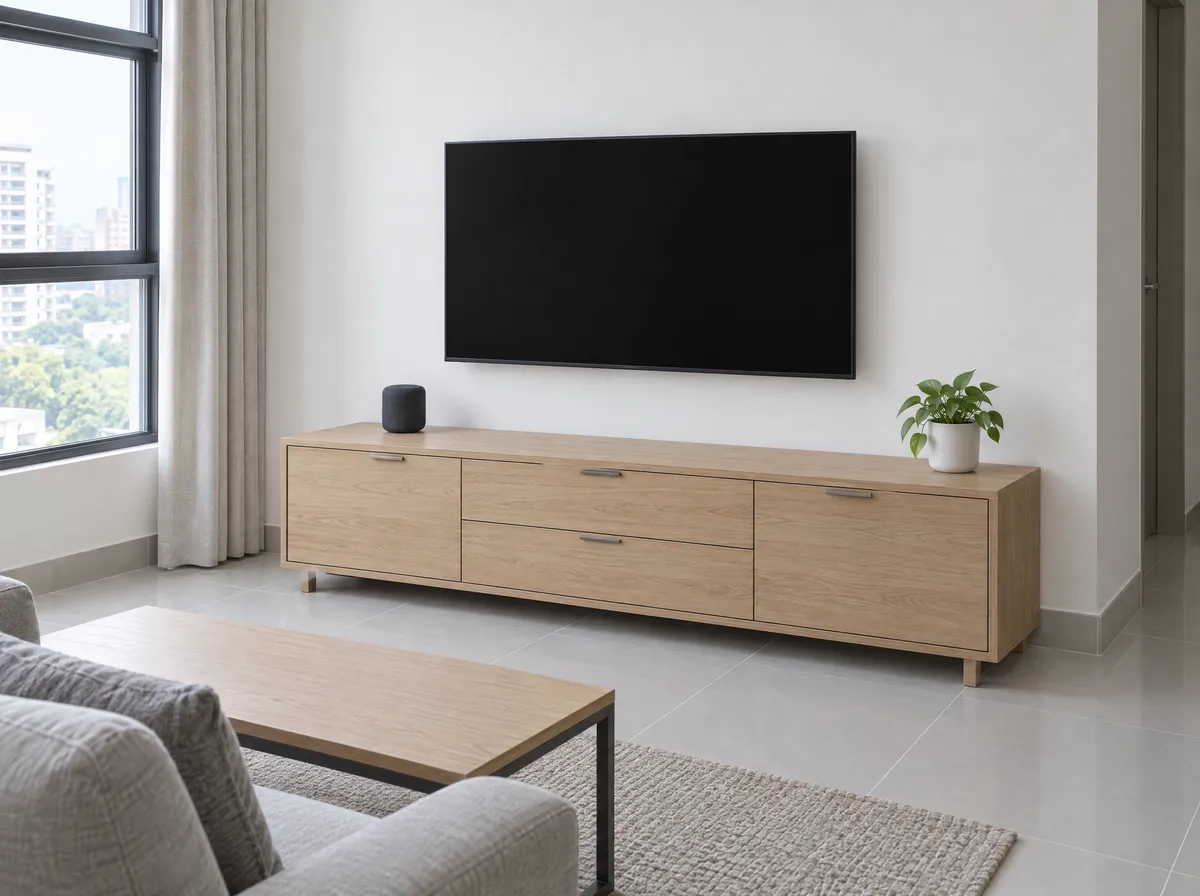
Low console on the floor
The simplest build. Easy to clean behind if it is not fixed to the wall. Suits renters and smaller living rooms.
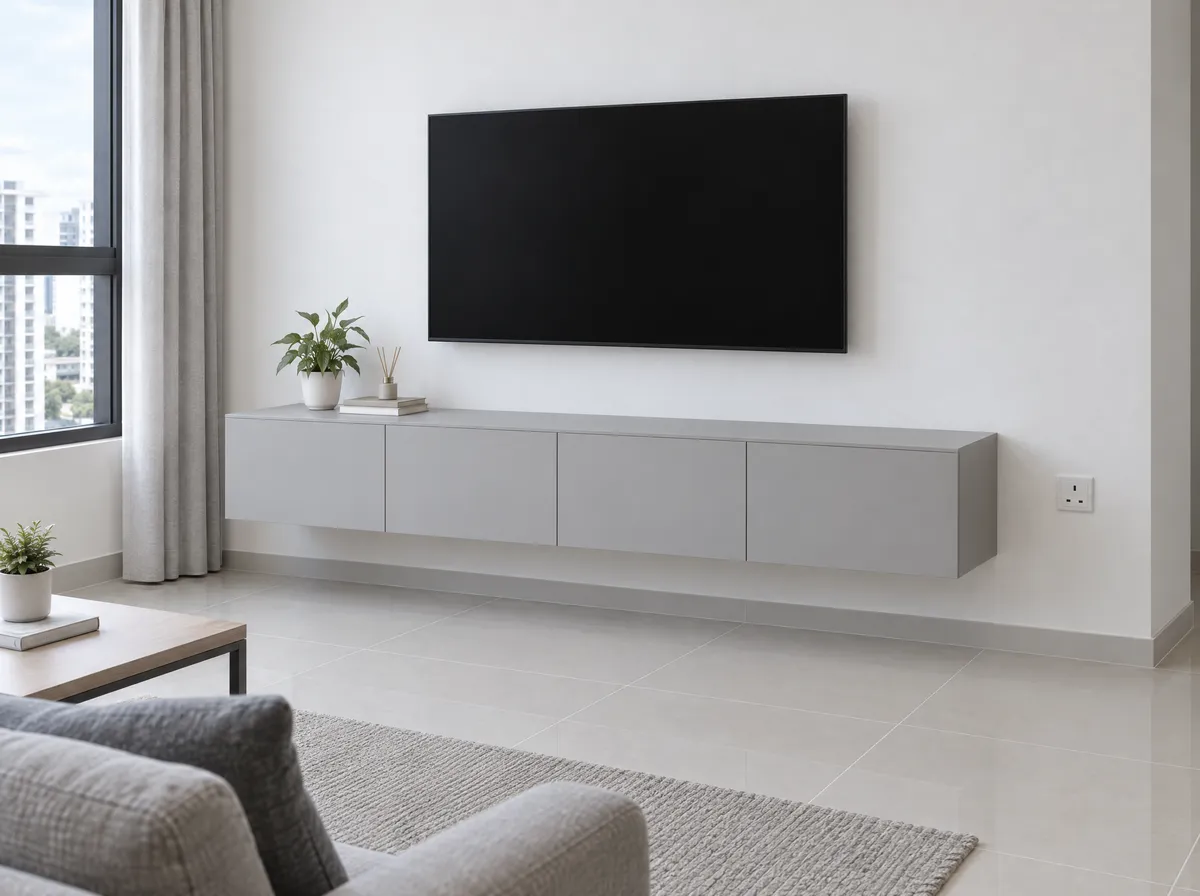
Floating (wall-hung)
Leaves the floor clear for cleaning and looks lighter. It hangs on the wall, so the wall type has to be checked before it is designed.
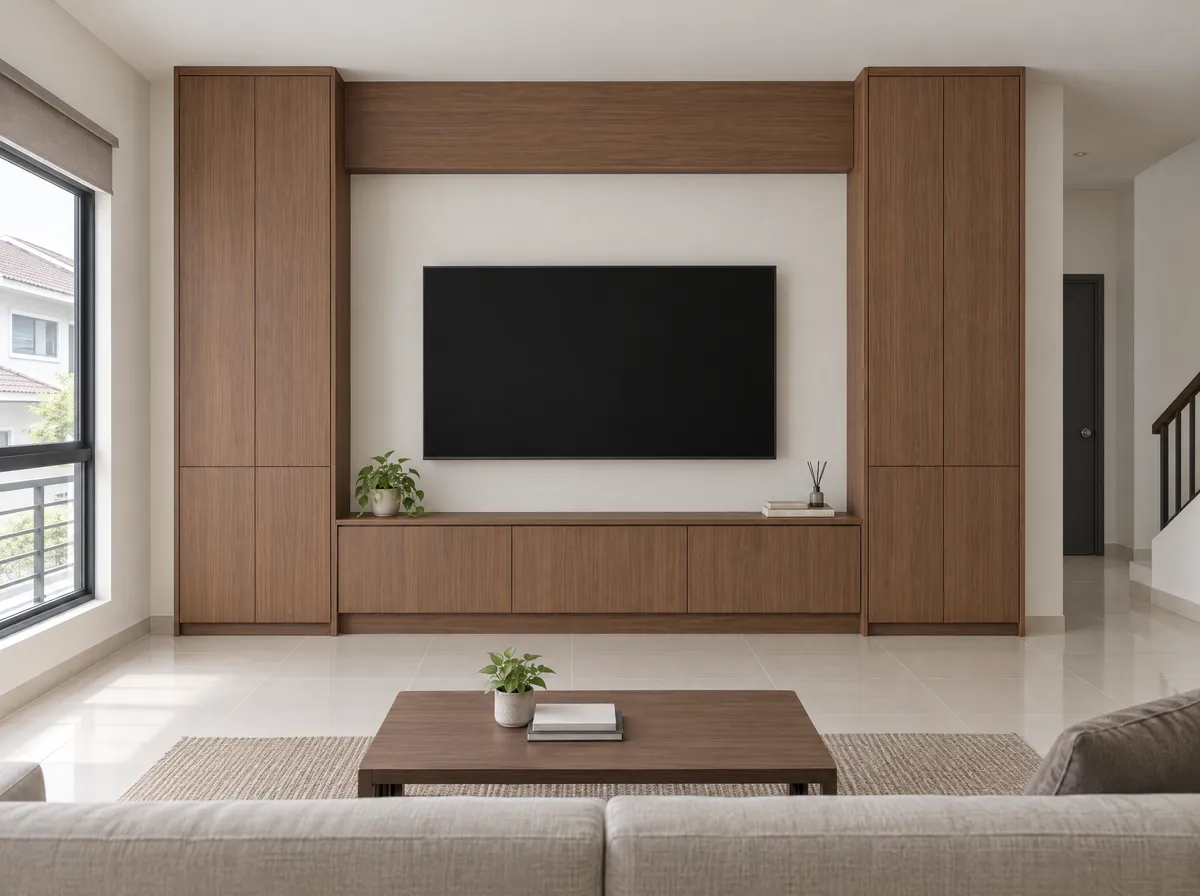
Full feature wall with side towers
Tall cabinets either side, a low unit under the TV and a top panel. The most storage, and the most planning for cables and power points.
Diagram
Console plus open shelves
Closed storage below, display shelves to one side. Good for books and decor; open shelves collect dust in our climate, so keep them few.
Before production
Settle these before the cabinet is made.
Most TV-cabinet problems start with something nobody measured. These are the questions to answer first.
- 01
Wall width and height
Measure the whole wall, including skirting, aircond trunking and any switch plates the cabinet must clear.
- 02
TV size and how it is mounted
A wall bracket into a solid wall is different from a TV standing on the cabinet. Decide first — it changes what the cabinet carries.
- 03
Power points and cables
Mark where the sockets and the TV point are. Plan cable holes and a cable path so nothing has to be cut on site.
- 04
Heat from the devices
Set-top boxes, routers and consoles run warm. Give that compartment open backs or vent gaps instead of a closed box.
- 05
The wall itself (for floating units)
Brick, concrete and drywall hold fixings very differently. Check before a wall-hung design is final.
Board and finish
What the cabinet is made of.
A TV cabinet sits in the living room for years, close to warm electronics and often against an outside wall in a humid climate.
| Part | What we use | Why |
|---|---|---|
| Carcass, shelves, doors | 18 mm plywood (11 layers) | Holds hinge and drawer-runner screws; cross-laminated layers stay stable in humidity. |
| Back panel | 6 mm plywood | Non-structural, so thin is fine. Cable openings can be cut where you need them. |
| Surface | Factory-pressed melamine facing | Wood-grain, marble-look and plain colours are all melamine designs, pressed on in the factory. |
| Formaldehyde grade | ENF, ≤ 0.025 mg/m³ (GB/T 39600-2021) | Our submitted sample tested 0.022 mg/m³ — report JC26-WT0087. |
How it works with JIYU
Send us the wall. We quote the cabinet.
WhatsApp a photo of the wall with its width and height, the TV size, and what you want to store. We come back with a layout suggestion and a quote. Cabinets are built with our ENF-grade board and installed by our own team; the board carries a 10-year warranty.
Questions we get asked
What homeowners ask about TV cabinets.
How deep should a TV cabinet be?
Deep enough for the devices you will put in it plus room behind them for plugs and cables. Measure your set-top box, router or console first, then decide the depth — a cabinet built to a standard depth can end up too shallow for the plugs.
Can a floating TV cabinet hold the TV?
It depends on the wall and how the cabinet is fixed. A TV on a wall bracket into a solid wall is the usual setup, with the floating cabinet holding only the devices. Check the wall type before a wall-hung design is finalised.
Plywood or particleboard for a TV cabinet?
Both are used. Plywood holds hinge and runner screws better and copes with humidity better at cut edges; particleboard is lighter on cost. Whatever the core, ask for the formaldehyde grade on a test report — ours is ENF (≤ 0.025 mg/m³), with the submitted sample at 0.022 mg/m³, report JC26-WT0087.
How much does a custom TV cabinet cost?
It depends on the wall size, the layout, how many doors and drawers it has, and the hardware. We do not publish prices — send us a photo of the wall with its width and height on WhatsApp and we will quote for your wall.
Planning a TV wall?
Send a photo of the wall, its width and height, and your TV size. We will suggest a layout and quote it.